
 Back in March, I wrote an article about Carbonite, where I reported on a possible loss of data effecting users backups. Very quickly, we had a response to the post from the CEO of Carbonite David Friend, who stated that there had been a problem with the firmware on the Promise servers they were using. Although it had effected some users, it certainly was not the calamity it had been made out to be, and he had phoned those people effected individually to apologize.
With that sort of commitment to the customer, I felt I had to find out a bit more about Carbonite, and the man behind it. Cap in hand, I sent an email asking for an interview. The answer came quite quickly, with an assured, “Sure”, and so off went the questions. In a few days, I had been given what I hope you will find, an interesting read from David Friend. He goes into, not only the Promise drama, but what makes a company like Carbonite tick, the people behind it, and the technology. So without further to do, read on…
B: Could you tell us a little about yourself, your company, and explain how you get to become a CEO of Carbonite?
DF: I studied engineering at Yale and Princeton. My first company right out of school was called ARP and we became famous in the music business for making the synthesizers used by many leading rock bands of the time, including The Who, Led Zeppelin, Stevie Wonder, and many many others.
I am a serial entrepreneur, and Carbonite is my sixth company since leaving graduate school in 1970. I started five of those companies with my co-founder and CTO, Jeff Flowers, who is one of the most brilliant technology minds I have ever met. Jeff is a simplifier by nature. Most engineers, because they tend to be smart, and can think of all the possibilities, tend toward complexity. I like things that are simple, and do one job really well. That's why Jeff and I are still partners after more than 25 years.
B: I would like to get last year’s problems out of the way. What did happen with the Promise hardware and subsequent lawsuit , and what is in place now to stop this happening again?
DF: Back in 2006 we bought RAID storage servers from Promise Technologies. The firmware in these servers had bugs. We did what any responsible company does when it buys a defective product from a vendor: we gave them a chance to fix the problems, and when that was not done to our satisfaction, we demanded they take the defective equipment back and give us a refund.
I was totally surprised at the irresponsible coverage this lawsuit received. Nearly everyone reported the problem in the present tense ("Carbonite loses data…"), even though the lawsuit clearly states that the problem occurred in 2006 and 2007. Also, nobody bothered to report that we quickly recovered over 99% of the lost backups. Only 54 people lost any data (their PCs crashed before we got them backed up again), and I called each of those customers personally to apologize. Almost all of them are still customers. Nobody called me to actually check on the facts, and I assume that nobody even looked at the lawsuit. Since then, I have gotten several letters of apology from bloggers who prematurely jumped on the bandwagon, one of which is reprinted on my blog, www.carbonite.com/blog.
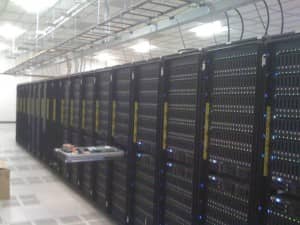
B: What hardware are you currently using, and what makes it a good choice for your data centre?
DF: We now use a very popular Dell RAID6 server that uses Enterprise Grade 1TB drives manufactured by Western Digital. These are 15 drive arrays, and 3 of those 15 drives would have to fail almost simultaneously before you would lose any data. When you calculate the probability of such simultaneous failures, you'll see that the likelihood of it happening to you in your lifetime is almost nil. People who think that storage in the cloud is less reliable than storing data on some local drive haven't analysed drive failure rates and don't understand RAID. Our most important job is to protect our users' backups and this is the best technology out there. With respect to drive failures, compared with a typical consumer hard drive, we calculate that our systems are 36 million times more reliable.
B: You mentioned RAID 6. Most of our readers will be familiar with RAID 1,2, and 0. Can you explain in layman’s terms how RAID 6 works, and the benefit for your organisation?
DF: Sure, as I mentioned above, the Dell storage servers that we use spread your backup data across 15 drives in a RAID6 array. If a drive fails, an alarm goes off and one of our operations people replaces it with a new drive. The new drive automatically rebuilds itself using other copies of your data that reside on the remaining 14 disks, so in a few hours, you are back to full redundancy. With RAID6, you can actually lose 2 of the 15 drives at the same time, and still not lose any data. The chances of 3 of the 15 drives failing within a few hours of each other is almost zero. And for the customer to actually lose data, their PC would also have to crash at the same time. We have over 10 million gigabytes of storage using this technology. And we get over 100 million new files every day.
B: Do you run any other technologies like virtualisation on your systems, and if so was this for scalability, or an economy drive? If not are you considering this?
DF: Scalability and reliability are the two biggest challenges for anyone wanting to be in our business. As we grew, we had to develop many new and innovative technologies. For example, the file system built into XP or Vista can handle perhaps a few million files. Our proprietary file system can handle hundreds of billions of files. When a customer deletes data from their backups, it leaves "empty space" on our servers. How do you defragment a 10 milllion gigabyte disk system? Bit errors creep into any data transfer and data storage system. We have a system that regularly, in the background, compares the hash values of every one of the 30 billion files in our data center against the originals on our customer's PCs. If an error is found, it is automatically corrected. When you restore files from Carbonite, they are always EXACTLY the same as the files you backed up, even years later. Standard operating systems, such as Windows and Linux, aren't very useful at these scales. They're as a boot system, but pretty much everything else has to be proprietary.
B: You must store huge amounts of data. How does the backup company, backup that much data?
DF: It's challenging: Data comes pouring into our data centers on 10gbps pipes. Hundreds of thousands of PCs are sending data to us simultaneously 24 hours a day — as I said above, we get more than 100 million new files every day. That takes very fast buffering, instantaneous error detection and correction, encryption, compression, sophisticated load balancing, and many other technologies. You have to be able to automatically recover from service outages without causing a hiccup in your users' backups or restores. And our customer base grows every month, so bringing up new capacity has to be as simple as unpacking the boxes, connecting the wires, and turning on the power. All of this has to be accomplished without losing even one byte. The bar to competing with companies at Carbonite's scale is now pretty darned high.
B: How do you see online backup going in the future? Do you expect to see growth over the next few years?
DF: It seems like the industry is just exploding. As we continue to drive down costs and as broadband continues to get faster and cheaper, user adoption will continue to grow. If your data is too valuable to have it just sitting there on your desk, even copied to multiple drives, where it can be lost to fire, theft, viruses, and so forth, then online backup is the only viable solution. And given that laptops have basically replaced desktop machines, you have people constantly moving around with their data and they want to be backed up constantly - at home, office, airport, hotel, Starbucks… Services like Carbonite are completely set and forget, and they work anywhere you're connected to the Internet. No extra equipment to drag around.
B: What makes Carbonite different in today’s marketplace, and can we expect any surprises for the future?
DF: What makes Carbonite different is its simplicity. We're still the only backup service that you just start with an email address and a password. No menus, no having to know where all your files are stored, no worries about programs like Quicken and Outlook. The other thing that people like about Carbonite is our smooth restore process. Many of our competitors have to ship you data in zip files or even on CDs or external drives. Compared with fast automatic downloads from Carbonite, their processes are SLOW and complicated. We also offer a higher level of support than many other companies in our business - everyone gets free unlimited live chat and remote diagnostic help. And we're committed to average answer times of under two minutes.
Wow, I would love to tell you what's coming in the next generation product from Carbonite, but that's going to have to wait. We just introduced a Mac version that is off to a really strong start. We also just introduced Remote Access which lets you get to all your backed up files, from any PC, with a browser. And we just introduced searchable restore that lets you quickly find any file in your backup. The next big thing you'll see in the coming months is a version of Carbonite specifically designed for the small business market. We'll be able to tell you more about when the beta launches in May or June.
One more thing that makes Carbonite different is that we're more likely to be there in the future when you need us. We are already at a scale that allows us to run profitably, we are growing very rapidly, and we have a boat load of cash to provide stability. Just because a backup service is owned by a big company doesn't mean they can get it to work or will stick with it. Just in the last 6 months HP has shuttered Upline, AOL closed xDrive, Microsoft stopped OneCare, and Yahoo folded their Briefcase service. Some of the smaller vendors appear to be on the ropes. Carbonite will be there in future years when you need to get your data back.
4 thoughts on “Interview with David Friend, CEO of Carbonite.”
Excellent interview and made a very interesting read.
“Standard operating systems, such as Windows and Linux, aren’t very useful at these scales. They’re as a boot system, but pretty much everything else has to be proprietary.”
Nonsense. Google’s operations are based on Linux, as are most of the top 500 supercomputers in the world. Open source software generally has a bug rate about 100 times lower than typical proprietary software. Linux is adequate to your needs.
David Friend is to be commended for his openness and clarity. He does a great job of hammering home the fact that the restore process and support are as important as the automated backup.